Friday, 18 January 2013

Sunday, 13 January 2013
The Mutiny of Characters
Once a writer creates the characters of a story, and those characters become whole and rounded characters, those characters do get a life of their own. And once your characters have a life of their own, they can and will mutiny their writer. The nature of each character will then start the process of dictating the story---the next scene, the next misshap, the next adventure.

As a writer, I have had to endure many strange notions. Having my characters mutiny---well, I just let them go ahead. I complied with the mutineers and let them tell the story. After all, their story is the real story. I just had to let my writer's ego get out of their way.
 Here are some of the character from book one that are still having adventures in book two.
Petra Longstride is the main character in this series. She is a nine year old princess who becomes a knight in book one. She is kind-hearted, friendly, innocent, brave, and somewhat stubborn. She can be tough when need be, like when she has to defend her friends, or stick up for something noble. Petra lives in The Kingdom of Pen Pieyu.
Snarls is a dragon and a secondary character in this series. But he's not your typical kind of dragon by any means He is also Petra's royal steed and adventure companion after, well, after stuff that happened in book one. He protects Petra, and sometimes he needs his own protecting.
Petra's parents, King Willy Longstride and Queen Mable Longstride, are a little stuffy and conventional. King Longstride makes up rules in the Royal Rule Book to try to get Petra to act like a princess. This, of course doesn't work. Queen Longstride has a severe fainting problem, which Petra is always the cause of.
Prince Nastybun is a midget prince from The Kingdom of Mesoggie He is the worst enemy of Pen Pieyu. He rules a puny army of scaredy-cat knights.
Bograt is a bog witch who tries to appear really mean and scary, until you mention that the King could make her wash and put on a frilly dress again, just for messing with someone on a mission. This apparently straightens her right up.
For more book one character information: http://www.dragonsbook.com/for-kids.html
Book two, Sir Princess Petra's Talent, introduces some more zany charaters; Duce Crablips from the Kingdom of Crablips, King Asterman from The Land of Lost Donkeys, and the nearly illiterate Gautes from The Vast Wilderness.
So, here's a hint to some of the adventures in book two.
King Longstride has written a new rule. The rule states that all princess knights (like there is more than one---silly king) must attend Talent School before the age of ten years and learn a skill suited for a princess. The princess knights must study under King Asterman and return with a princess certificate or else the royal magician will , , ,well, let's not go there just yet.
Petra is not happy about attending Talent School. After all, she is a knight. She just wants to do knightly things, not any sissy, girly stuff like knitting or crocheting.
Well, at least Snarls will be by her side enduring the hardships of Talent School. And once they finally get out of Talent School, more adventures follow in The Vast Wilderness.
A few more hints of book two:
Someone else in book two becomes a knight.
Some others may or may not get spelled and be turned into something they weren't before.
Petra does get a talent, but not one the king could foresee.
And what the heck is a Ganute, anyway?
Book two, Sir Princess Petra's Talent - The Pen Pieyu Adventures, forthcoming, March, 2013.

While writing the second book in The Pen Pieyu Adventure, it felt like I, the writer, was kidnapped by my own characters. I say the characters did mutiny because just when I thought I knew where the story was going, the characters had other ideas.
As a writer, I have had to endure many strange notions. Having my characters mutiny---well, I just let them go ahead. I complied with the mutineers and let them tell the story. After all, their story is the real story. I just had to let my writer's ego get out of their way.

Petra Longstride is the main character in this series. She is a nine year old princess who becomes a knight in book one. She is kind-hearted, friendly, innocent, brave, and somewhat stubborn. She can be tough when need be, like when she has to defend her friends, or stick up for something noble. Petra lives in The Kingdom of Pen Pieyu.
Snarls is a dragon and a secondary character in this series. But he's not your typical kind of dragon by any means He is also Petra's royal steed and adventure companion after, well, after stuff that happened in book one. He protects Petra, and sometimes he needs his own protecting.
Petra's parents, King Willy Longstride and Queen Mable Longstride, are a little stuffy and conventional. King Longstride makes up rules in the Royal Rule Book to try to get Petra to act like a princess. This, of course doesn't work. Queen Longstride has a severe fainting problem, which Petra is always the cause of.
Prince Nastybun is a midget prince from The Kingdom of Mesoggie He is the worst enemy of Pen Pieyu. He rules a puny army of scaredy-cat knights.
Bograt is a bog witch who tries to appear really mean and scary, until you mention that the King could make her wash and put on a frilly dress again, just for messing with someone on a mission. This apparently straightens her right up.
For more book one character information: http://www.dragonsbook.com/for-kids.html
Book two, Sir Princess Petra's Talent, introduces some more zany charaters; Duce Crablips from the Kingdom of Crablips, King Asterman from The Land of Lost Donkeys, and the nearly illiterate Gautes from The Vast Wilderness.
So, here's a hint to some of the adventures in book two.
King Longstride has written a new rule. The rule states that all princess knights (like there is more than one---silly king) must attend Talent School before the age of ten years and learn a skill suited for a princess. The princess knights must study under King Asterman and return with a princess certificate or else the royal magician will , , ,well, let's not go there just yet.
Petra is not happy about attending Talent School. After all, she is a knight. She just wants to do knightly things, not any sissy, girly stuff like knitting or crocheting.
Well, at least Snarls will be by her side enduring the hardships of Talent School. And once they finally get out of Talent School, more adventures follow in The Vast Wilderness.
A few more hints of book two:
Someone else in book two becomes a knight.
Some others may or may not get spelled and be turned into something they weren't before.
Petra does get a talent, but not one the king could foresee.
And what the heck is a Ganute, anyway?
Book two, Sir Princess Petra's Talent - The Pen Pieyu Adventures, forthcoming, March, 2013.
Saturday, 5 January 2013
Book Review, Whoever Heard of a Fird?

Whoever Heard of a Fird?
Author: Othello Bach
Illustrator: Shann Hurst
Publisher: Othello Bach
Release date: October 10, 2012
ISBN: 978-1-47933318-9
Paperback, 60 pages
From the Back Cover: If you haven't heard of a fird, part fish, part bird, you don't know that he's looking for a herd of fird. He wants to find out if he's "firding" right. You see, Fird was raised a a nest of Dickens, part dog, part chickens, but they never heard of a fird, and they don't know if he's firding right.
So Fird sets out to find a herd of Fird. Along the way, he meets many two-feature creatures--- whimsical animals like shamels---part sheep, part camels, and bertles---part bear, part turtles. But no one has heard of a fird . . .

When Fird and his best friend, Snyder Spider, set off to find a herd of firds, they are warned by Lucille Dicken that big, bad boogie monsters loom at the bottom of the mountain. Fird didn't even know that they lived on a mountain.
". . . I must find out where I came from, where I'm going, and what I'm supposed to be." Fird tells the dickens, even though Fird is scared.
Soon Fird and Snyder Spider come across the boogie monsters. But these are no ordinary boogie monsters--they are the kind that . . . well, I don't want to say and give it away. Somehow, Fird and Snyder do get past the boogie monsters and continue to search for a heard of fird.
Fird and Snyder then meet Hyenant--part hyena, part ant-- who has never heard of a fird. Even his magic coat can't produce a herd of fird. "There's no such thing, I assure you." Hyenant tells Fird.
Neither have the driders--part dragon, part spider--ever seen a fird. Nor can the bertles--part bear, part turtle--say that they have ever heard of a fird.
Although most of the two-feature creatures are friendly, there is trouble when Fird and Snyder meet the snoozes--part snake, part mongoose--because the snoozes just aren't very nice. And beside, they've never heard of a fird either.
The woose, the shamels, the blizzard, the girouse---none of the two-feature creatures can help Fird. How will Fird ever find his herd of fird and find out where he belongs?

This is a masterfully written and creative story that embraces a powerful message for all of us--being what we want to be, without looking outside of ourselves. An excerpt from one of the story's poems depicts this wonderfully:
. . .
This is your time; it is your time to shine
But you need to realize:
Everything you need for you to succeed
Lies between your ears behind your eyes.
. . .
I thoroughly enjoyed this book. The writing is witty and whimsical, and the whole book has a magical uniqueness. There are several poems laced throughout the story which are delightfully humorous. The poems in the book are actually the lyrics to songs written by the author. You can play the songs here as you get to that part of the story.

I did listen to the audio book also, which is very professionally done, and a fun experience in itself. Not only is the story read with pazazz, all the poems in the book break out into toe-tapping, catchy songs.
The book is also an audio book with a Free download for a limited time.
Go here
Author, Othello Bach, website
Author, Othelo Back, bookstie
Illustrator, Shann Hurst, website
Copyright ©2012 by Othello Bach, used with permission
Illustrations: Copyright ©2012 by Shann Hurst
Sunday, 30 December 2012
Misplaced and Dangling Modifiers
Trying to get a simple definition of a Dangling Modifier from a grammar source can be frustrating. When I need to look something up, I don't want a complicated answer that makes me more confused that I already was.

So here is the simple definition of a Dangling Modifier with some examples.
A dangling modifier is a word or phrase that modifies a word not clearly stated in the sentence.
You do have a certain amount of freedom in deciding where to place the modifier in a sentence:
Sue tamed the dragon easily.
Sue easily tamed the dragon.
Easily Sue tamed the dragon.
However, you will want to be wary of the misplaced modifiers as their position can modify the wrong thing. Writing can be greatly improved by paying attention to the misplaced modifier.
The single-word modifiers should be placed near the word or words they modify so that the reader gets a clear message of what you are saying. Consider these sentences:
[wrong] After Sue's dragon-speaking lessons, she could understand dragon language spoken by the professor easily.
Does Sue understand dragon language easily, or does the professor speak it easily?
The next sentence makes the meaning clear:
[right] Sue could easily understand dragon language after her dragon-speaking lessons taught by the professor.
It is also important to be careful about where you put limiting modifiers. These are words like "nearly", "just", "only", "almost", etc. Misplaced limiting modifiers can change the entire meaning of a sentence when placed next to the wrong word:
[wrong] Sue almost ate all of the dragon's food. (she didn't "almost eat" it)
[right] Sue ate almost all of the dragon's food.
[wrong] Sue has nearly annoyed every dragon she plays with. (she hasn't "nearly annoyed" them)
[right] Sue has annoyed nearly every dragon she has played with.
So, the lessons here are for Sue: While easily taming your dragon and easily speaking his language, do not continue eating almost all of the dragon food and annoying nearly every dragon you play with.
More grammar lessons to come regarding: misplaced phrases and clauses; squinting modifiers; split infinitives; and more about dangling participles.
Sheesh, there's a lot of rules in English.
copyright, Diane Mae Robinson, 2012
Sunday, 23 December 2012
From An Author I Greatly Admire
It is a great honor to have your book labeled 'a silly adventure' when you are a silly-adventure writer.

An author I greatly admire, Mark Simon Smith, who writes amazing fantasy, silly adventure kids books has reviewed my book, Sir Princess Petra – The Pen Pieyu Adventure, a fantasy, silly adventure kids book.
*****
5.0 out of 5 stars Highly Recommended Silly Adventure, November 29, 2012
By Mark Smith “Children’s Book Author”
This review is from: Sir Princess Petra (Pen Pieyu Adventures) (Perfect Paperback)
As an author, I greatly appreciate the whimsical qualities of Diane Mae Robinson’s work. Often times, it’s not enough to have a solid, well-written story when it comes to creating children’s books. There needs to be a bright sparkle that captures the child’s attention and pulls them along. So many times I’ve watched my son start a book and then put it down, just a few pages in, because there was no flash of color that kept him interested.
Robinson’s writing has it all and is a perfect read for that younger reader striking out on their own. I love her vivid descriptions and laugh-out-loud whimsy – it’s the exact same thing I strive to accomplish when writing.
Highly recommended.
*****
Recently, I read and reviewed Mark Simon Smith’s book, Sir Nathan and the Quest for Queen Gobbledeegook. I became an instant fan. This book is the best children’s book I have read in many, many years–and believe me, I read a lot of children’s books.http://www.dianemaerobinson.com/2012/11/book-review-sir-nathan-and-quest-for.html
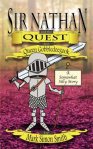 Queen Gobbledeegook. I became an instant fan. This book is the best children’s book I have read in many, many years–and believe me, I read a lot of children’s books.http://www.dianemaerobinson.com/2012/11/book-review-sir-nathan-and-quest-for.html
Mark Simon Smith’s perfected writing and zany humor captures the reader in the first paragraph and takes them on a wonderful, incredible adventure that you don’t want to end.That is what a good book is all about!
I have received his second book, Sir Nathan and the Troublesome Task, and can’t wait to start it during the holidays. I will put up a review of this book, also.

For more information on Mark Simon Smith and his awesome books, visit: http://www.somewhatsillystory.com/reviews.html
http://www.facebook.com/somewhatsillystory
http://www.facebook.com/somewhatsillystory
Sunday, 16 December 2012
More Dragon Fan Mail. Sheesh!
Really, my dragon gets more fan mail than I do. Snarls is a secondary character in my, The Pen Pieyu Adventure, series. To read the first fan letter about Snarls from Miss Anonymous, read the blog of Nov. 11, 2012.

Dear Author Person,
I am miffed. I never thought you would post my last letter for all the world to see. How is this going to make Snarls feel? Okay, he will feel great. Attention is attention to him. But what about me? I don't need the entire world knowing I have a dragon friend? Do you know how ridiculous that sounds? Okay, maybe you don't, but it does.
Who is that with Snarls in the picture?Some skank character of yours? It is bad enough he hangs with Petra, and now some character named Babblin wants to talk his ear off, and mine too. Why did you send her with Snarls to my house? Do you really think I need a talker on top of a fire breathing snoring dragon?
I like Snarls, I really do, even the fire he puts everywhere is kind of endearing. Oh,and thanks for the tip about giving Snarls water before bedtime---to cut down on the fires.
Snarls is most welcome, as long as he stops scaring the kitties. As soon as one of them climbs up his tail, by his invitation, Snarls flips his tail and sends the cat flying through the air. Sure they always land on their feet but I always nearly have a heart attack. I got an email from him saying he was quite busy with book two, something about getting the editors to see things his way "or else."
I have never been visited by story book character before yours. I am kind of getting used to it.
And yes, when Snarls visits me he always brings pajamas and snacks.
P.S. Fire department bill for all the previous havoc Snarls created at my house is in the mail.
Miss Anonymous.
Dear Miss Anonymous,
What can I say. My dragon has a mind of his own and he does play a little rough. We're working on that.
I can't believe he complained about his role in book 2. He seemed fine with it all through the writing and editing. Well, there is a little part about him wearing a pink, tasseled saddle that he complained about, but I thought he was over that.
I can't believe he complained about his role in book 2. He seemed fine with it all through the writing and editing. Well, there is a little part about him wearing a pink, tasseled saddle that he complained about, but I thought he was over that.
Sorry for all the havoc he creates. Snarls really likes visiting you and, all the sleep-overs.
The Author.
Visit my website for more information on Snarls and all the characters from book one, Sir Princess Petra - The Pen Pieyu Adventures, http://www.dragonsbook.com And read more about my fantasy kids books and dragon books for children.
Visit my website for more information on Snarls and all the characters from book one, Sir Princess Petra - The Pen Pieyu Adventures, http://www.dragonsbook.com And read more about my fantasy kids books and dragon books for children.
Sunday, 9 December 2012
Writing Lesson From Picasso
There are lesson to be learned from the art and the mind of Pablo Picasso. His techniques, creative insights, and empathy of his art has distinguished him as the revolutionary artist of the twentieth century.
Pablo Picasso
 Oct. 25, 1881 - Apr. 8, 1973
Born in Malaga, Spain
"When I was a child, my mother told me, 'If you become a soldier, you will be a general. If you become a monk, you will end up as the pope.' Instead I became a painter and wound up as Picasso."
Ah, the confidence to do what you were destined to do in life, and to do it well. This is a lesson all creators of the arts can take to heart.
Pablo Picasso was an innovative thinkers of his time. He reinvented himself many times over during his career. Depending on his mental state and what was going on in the world at the time, his paintings took on the persona of: depression during his 'Blue Period'; love during his 'Rose Period'; shocking abstracts from his 'Cubist Period'; and the 'Classic Period' as World War 1 broke out. But at each stage, the art was profound and empathetic.
Does this mean that, as a writer, if we can feel the deepest emotions of what we are writing at a certain time, the work will be more poignant? I think that is exactly what Pablo Picasso was telling the world.
If a writer or an artist does not have their emotions wholeheartedly invested in their art, then neither will the reader or the viewer.
Pablo Picasso knew of the complexity of creating a piece of art, but he also understood the simplicity of art. Upon passing a group of school kids in his old age Picasso remarked,
"When I was as old as these children, I could draw like Rapheal, but it took me a lifetime to learn to draw like them."
As a children's book author, this statement is a profound lesson to me. It's as if the artist is telling me to leave behind my adult ego and think as a child, to play as a child, to create as a child. And then, and only then, when I have re-mastered the skills of being a child, to write the books for the child.
Being an artist has also taught me lessons in writing for children, and teaching art to children, more so. Teaching children helps me to understand their creative insights, their lack of ego or competition, and their pure imagination that is so very intense. Children create from their heart.
So as a children's book author, the lessons I've learned from being around the creative minds of children is what grounds me in my writing, and teaches me how to create stories for children, through the eyes of a child, and with the heart of a child. Children have also taught me how to capture childlike innocence in my own art.
Pablo Picasso has made a profound impact on the world of art, and his creative genius is a lesson to all who create, in all aspects of the arts.
"If only we could pull out our brain and use only our eyes." Pablo Picasso
http://www.abcgallery.com/P/picasso/picasso-2.html
May the wheels of creativity never stop turning.
Join the Kid Lit blog hop from December 5 - 26: http://kid-lit-reviews.com/kid-lit-blog-hop-6/
Born in Malaga, Spain
"When I was a child, my mother told me, 'If you become a soldier, you will be a general. If you become a monk, you will end up as the pope.' Instead I became a painter and wound up as Picasso."
Ah, the confidence to do what you were destined to do in life, and to do it well. This is a lesson all creators of the arts can take to heart.
Pablo Picasso was an innovative thinkers of his time. He reinvented himself many times over during his career. Depending on his mental state and what was going on in the world at the time, his paintings took on the persona of: depression during his 'Blue Period'; love during his 'Rose Period'; shocking abstracts from his 'Cubist Period'; and the 'Classic Period' as World War 1 broke out. But at each stage, the art was profound and empathetic.
Does this mean that, as a writer, if we can feel the deepest emotions of what we are writing at a certain time, the work will be more poignant? I think that is exactly what Pablo Picasso was telling the world.
If a writer or an artist does not have their emotions wholeheartedly invested in their art, then neither will the reader or the viewer.
Pablo Picasso knew of the complexity of creating a piece of art, but he also understood the simplicity of art. Upon passing a group of school kids in his old age Picasso remarked,
"When I was as old as these children, I could draw like Rapheal, but it took me a lifetime to learn to draw like them."
 |
| Pablo Picasso, Self Portrait, 1907, oil on canvas |
As a children's book author, this statement is a profound lesson to me. It's as if the artist is telling me to leave behind my adult ego and think as a child, to play as a child, to create as a child. And then, and only then, when I have re-mastered the skills of being a child, to write the books for the child.
Being an artist has also taught me lessons in writing for children, and teaching art to children, more so. Teaching children helps me to understand their creative insights, their lack of ego or competition, and their pure imagination that is so very intense. Children create from their heart.
So as a children's book author, the lessons I've learned from being around the creative minds of children is what grounds me in my writing, and teaches me how to create stories for children, through the eyes of a child, and with the heart of a child. Children have also taught me how to capture childlike innocence in my own art.
 |
| Diane M. Robinson, The Princess Knight, 2009, acrylic on canvas |
Pablo Picasso has made a profound impact on the world of art, and his creative genius is a lesson to all who create, in all aspects of the arts.
"If only we could pull out our brain and use only our eyes." Pablo Picasso
http://www.abcgallery.com/P/picasso/picasso-2.html
May the wheels of creativity never stop turning.
Join the Kid Lit blog hop from December 5 - 26: http://kid-lit-reviews.com/kid-lit-blog-hop-6/
Sunday, 2 December 2012
Three Common Punctuation Problems
I am a writer. I like to write. I do not like to
ponder over punctuation, but as a writer I must.
Here are some of the problem punctuations that usually
get my head swimming.
Writers often get the colon and semicolon confused,
but they are very different. And then throw in the em dash, and it all gets mind boggling.
co·lon 1 (k
 l
 n)
ln)
n. pl. co·lons
1.
a. A punctuation mark (
: ) used after a word introducing a quotation, an explanation, an example, or a
series and often after the salutation of a business letter. http://www.thefreedictionary.comhttp://www.thefreedictionary.com/colon
sem·i·co·lon (s m
 -k
 ln)
m-kln)
n.
A mark of punctuation ( ; ) used to connect independent clauses and
indicating a closer relationship between the clauses than a period does. http://www.thefreedictionary.com/semicolonhttp://www.thefreedictionary.com/semicolon
Example of colon and semicolon use from my book, Sir
Princess Petra.
“The choices are: to capture a crocodile and make his
skin into a royal leather chair; to hush that howling, nasty dragon, Snarls, in
the Forest of Doom; or to eat a roomful of raw onions.”
em·dash or em dash (md sh)
mdsh)
n.
A symbol (  ) used in writing and printing to indicate a break in thought or
sentence structure, to introduce a phrase added for emphasis, definition, or
explanation, or to separate two clauses. http://www.thefreedictionary.com/emdashhttp://www.thefreedictionary.com/emdash
) used in writing and printing to indicate a break in thought or
sentence structure, to introduce a phrase added for emphasis, definition, or
explanation, or to separate two clauses. http://www.thefreedictionary.com/emdashhttp://www.thefreedictionary.com/emdash
(The em dash is made by hitting your dash key three times, then
backspacing to make it a solid line. When writing in 'Blogger', I have to use a 'striketrough'.
Example of the em-dash from my book, Sir Princess Petra’s Talent.
Petra wiped away a tear--a tear of happiness and pride.
Or in this sentence where the king is reading from the royal rule book
and looks up from his reading to emphasize something.
“Then, the hereby said princes--meaning you--will return to the
kingdom with a proper princess certificate.”
For some reason, these three punctuation rules seem confusing. And I
know they are not set in stone as I have seen sentences in other books, and
they were dealt with differently.
When I'm not sure about these rules, this is when I question my editor for their proper use. The editor has greater insights into the punctuation dilema than I do.
And sometimes after I've pounded my head against the wall over some rule or other, my editor's answer is--it's just a matter of style.
Go figure.
copyright, Diane Mae Robinson, 2012

copyright, Diane Mae Robinson, 2012

Sunday, 25 November 2012
The Publishing Industry
I don't usually do reprints of other people's articles, but this one was worth it. This article explains a lot about what is going on with those .99 cent ebooks.
The contracts I have for my books are traditional publishing contracts. I cannot discount my ebooks due to legal clauses in those contracts. And most important, I do not wish to discount my ebooks as I feel very strongly that authors should be paid a fair price for their work.
Anyway, read on and see what you think.
Are Self-Publishing Authors Killing the Publishing Industry?
 | Posted: 10/24/2012 8:27 am EDT Updated: 10/24/2012 8:27 am
EDT
Self-published authors have created
a devaluing of the written word, and, some of them are scrambling to see how low
they can go to get noticed.
Let us list the ways: 99-cent price
point for ebooks. Free ebooks via KDP Select program. Unedited work. Kindle
giveaways to get attention and bulk up sales. And lastly, nasty reviews from
other authors with the sole purpose of driving down customer
ratings.
Why are indie authors selling their
work so cheap? In short, mismanaged expectations. Many self-published authors
hear about the outliers who earn hundreds of thousands of dollars, and they’ll
do anything to try and reach that pinnacle. The plain fact is that most of them
never will.
The Guardian recently reported that, “Despite the splash
caused by self-publishing superstars such as Amanda Hocking and EL James, the
average amount earned by DIY authors last year was just $10,000 (£6,375) – and
half made less than $500.” That was backed up by a recent poll of authors
who have 2 or less 99-cent ebooks on the market that revealed that 75% of
authors are selling less than 100 ebooks per month at that rate, with 46%
selling less than 10 ebooks per month.
Yes, there are 99-cent anomalies. A
recent headline on GalleyCat reported that,
“99-Cent Sale Sweeps Self-published Bestseller List”. Yes, Stephanie Bond did
achieve bestseller status with three of her titles, all listed for 99 cents but
what most indie authors fail to realize is that Stephanie was previously
traditionally published and has a following in place. As a new author, that’s
very difficult to match.
Although many do try, and not just
by giving away books for less than a buck. Many indie authors are now relying on
gimmicks to gain sales. They’re giving away Kindles and iPads in exchange for
reviews and as raffles during sales promotions. Traditionally published authors
aren’t stooping to these tactics. Why are indies? The short answer is that with
over 1 million ebooks published each year, it’s difficult to make a
mark.
The lesson may be that if indie
authors don’t value their work, chances are no one else will either. Readers
want, and deserve, quality books, and they’re used to paying for them. Think
about it: pennies for pages didn’t exist before ebooks and self-publishing were
viable.
Does this mean that self-published
authors are killing the publishing industry? Yes, in a sense it does. What can
be done about this devaluing of the written word? How can self-published authors
change this scenario and help make self-publishing, as a whole, shine and earn
as respectable of a reputation as traditional publishing?
Goals of self-published authors
vary. Some dream of wealth, while others simply want to get their stories read.
Some writers are now afraid to self-publish because of the reputation that
self-published works are garnering.
If indie authors are going to make their
mark, they’ll need to band together, put out reputable works, and stop looking
for get-sales-quick gimmicks. The cycle of pricing books lower than the next
author is a dangerous one. After all, there’s nowhere left to go after
“free”.
*****
In my opinion, there are a lot of pros and cons about self-publishing. And one of the pros is the independence you have over your own book. One of the cons being that a good writer with a good book can feel that they have to compete with lots of badly written books in the free or .99 cents category.
So, if you have a well written book and have self-published, I think that by taking the longer and more conventional road of marketing strategies, your book and your author's name will get out there in a more professional way, without giving your work away for next to nothing.
What do you think about the self-publishing industry?
Subscribe to:
Posts (Atom)